Exploring Historic Streets: A Guide to Urban Photo Walks
Theme: Exploring Historic Streets: A Guide to Urban Photo Walks. Step into timeworn avenues where brick, stone, and shadow hold stories. Join our community stroll through history, share your favorite routes, and subscribe for weekly prompts that turn every wander into a narrative-rich photo walk.
Charting Your Route Through Time
Reading a City’s Layers on a Map
Overlay historic maps with modern transit charts to trace vanished tram lines, market squares, and river embankments. Plot a loop with twenty-minute segments, and tell us which mapping tools make your scouting effortless and fun.
Choosing Neighborhoods with Narrative
Seek districts where eras overlap: a medieval arcade beside an Art Nouveau café, a faded cinema near a restored guildhall. Short distances, cafés for breaks, and civic landmarks help; comment your go-to starting points and why they never disappoint.
Packing Light, Shooting Long
Carry a fast prime, a discreet sling bag, spare batteries, and comfortable shoes. Minimal gear keeps you nimble on cobbles and stairways. Subscribe for our printable, theme-specific packing checklist designed for historic streets and changing light.
Light That Loves Old Stone
Golden Hour on Cobbles
Low sun kisses uneven stone, pulling out relief in lintels, cornices, and brick joints. Position yourself up-slope so reflections skim puddles like small mirrors. Tag us with examples where sunlight turned a quiet lane into a living tapestry.
Blue Hour and Lantern Glow
As sky cobalt deepens, warm windows and gas-style lamps sing. Balance color temperature to preserve that period-film hush. Post your best blue-hour frame and describe one detail—a sign, balcony, or lantern—that made the scene feel timeless.
Midday Strategies That Still Work
When sun is harsh, chase shade: narrow alleys, arcades, cloisters. Use reflected light off pale plaster for gentle portraits of façades. Share how you meter in contrasty conditions without losing those delicate, hand-carved doorframes.
Leading Lines Along Tram Rails
Rails, gutters, and stone seams point the eye toward steeples or clocktowers. Kneel for a shallow angle that exaggerates perspective. Comment with one photo where leading lines didn’t just guide vision, but hinted at movement through time.
Doors, Windows, and Threshold Stories
Frame details that speak of hands: worn knobs, scuffed thresholds, letter slots polished by decades. A baker once waved me closer to photograph his century-old oven door—share a similar moment of unexpected permission and trust.
Human Scale in Historic Frames
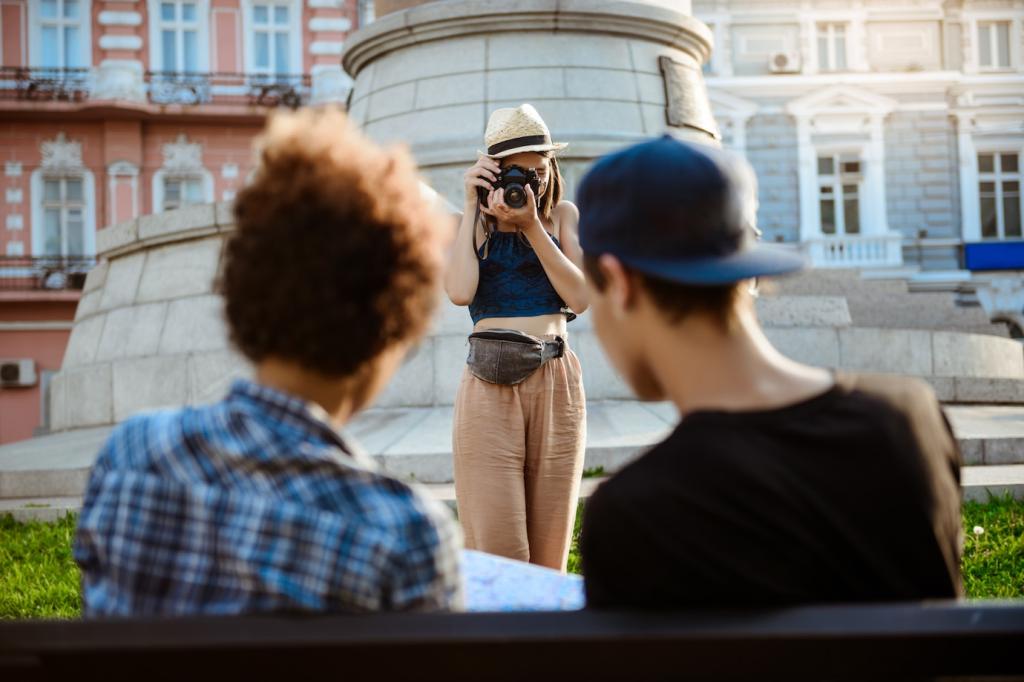
Include a passerby or bicycle to anchor scale against grand façades. Ask yourself what rhythm their stride adds to stone rhythms. Upload an image where one figure turned ornamented masonry into a relatable, lived-in place.
People, Respect, and Safety on Lived-In Streets
If faces are identifiable, seek permission; a nod or smile goes far. Step aside for residents, deliveries, and elders. Share any phrase you’ve mastered for polite requests that feels authentic in your own voice and culture.
Note the year a façade was rebuilt, the craft that once filled a shop, or the origin of a street name. Ask locals for one detail to include. Share a caption that changed how viewers read your entire series.
From Snapshot to Story
Document bell chimes, tram hums, baking bread, and rain on slate. These sensory cues inform your edits later. Tell us which surprising sound or smell unlocked a scene’s emotional color for you during a recent walk.
From Snapshot to Story
Color That Respects Age
Nudge warmth into stone without neonizing brick. Protect muted paint and oxidized copper. Describe one subtle HSL adjustment that kept your image believable while revealing the quiet charm of weathered materials.
Texture Without Gimmicks
Sharpen selectively on carvings and brick joints; soften sky noise. Avoid heavy clarity on faces or plaster. Comment how you balance detail and tenderness so a street feels touched by time, not by sliders.
Sequencing a Quiet Arc
Arrange images to mirror a walk: arrival, discovery, intimacy, farewell. Let one motif—a tile pattern, a crest—recur. Share a sequencing tip that helped your viewers feel the route under their feet.